

News
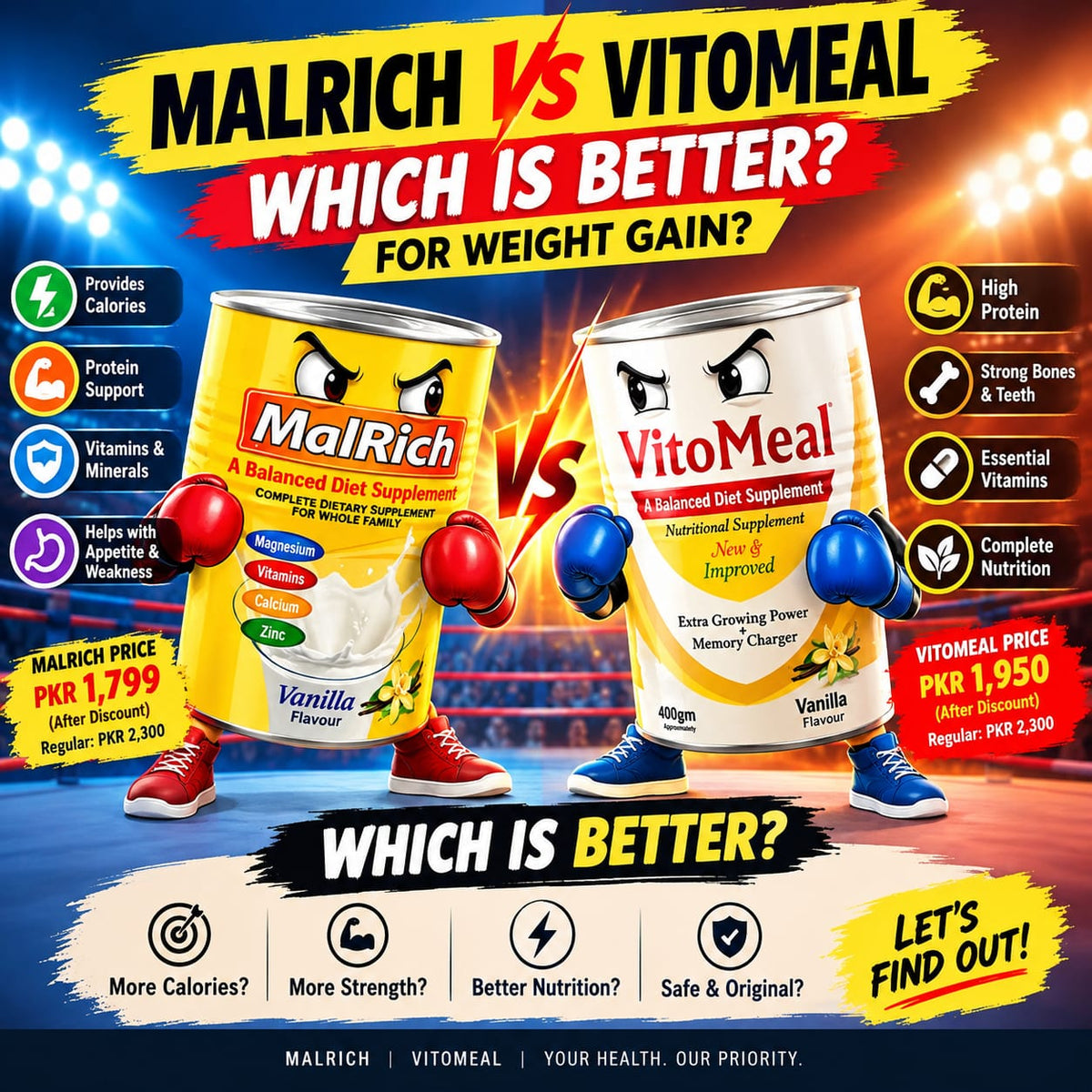

Malrich Food Supplement: Complete Guide to Benefits, Ingredients, Calories, Price & Daily Use
Malrich Food Supplement: Complete Guide to Benefits, Ingredients, Calories, Price & Daily Use Looking for a convenient nutritional supplement to add to your daily routine? Malrich Food Supplement is a multinutrient powdered formula designed to provide calories, protein, vitamins, and minerals as part of a balanced diet. Whether you need nutritional support during periods of weakness, reduced appetite, increased nutritional needs, or simply want an easy-to-prepare supplement, Malrich can fit into your daily nutrition routine. In this guide, we cover Malrich benefits, ingredients, calories, price in Pakistan, how to use Malrich, available flavors, and frequently asked questions. What Is Malrich Food Supplement? Malrich Milk Powder is a powdered food supplement containing calories, protein, vitamins, minerals, and other essential nutrients. Its convenient powdered formula can be mixed according to the product directions, making it easy to include in your daily routine. Malrich is designed to provide additional nutritional support alongside a balanced diet. Malrich Food Supplement Benefits Malrich provides a combination of calories, protein, vitamins, and minerals that can complement your everyday nutritional intake. Key features include: ✔ Provides calories to support daily nutritional intake✔ Contains protein, vitamins and minerals✔ Supports daily energy and vitality✔ Provides nutritional support during increased dietary needs✔ Easy-to-mix powdered formula✔ Convenient for everyday use✔ Supports overall nutritional balance Individual results can vary depending on diet, lifestyle, and personal nutritional needs. Malrich Uses Malrich may be used as nutritional support in situations where additional dietary intake may be required, including: Loss of appetite Underweight Malnutrition General weakness or debility Increased nutritional needs during recovery Fatigue Stress-related nutritional needs Muscle and physical weakness During periods During pregnancy, when appropriate and approved by a healthcare professional Nutritional support during recovery from illness or surgeryMalrich is a food supplement and not a medicine. If you have a medical condition or specific nutritional requirements, consult a healthcare professional. Malrich Key Ingredients Malrich contains a combination of vitamins, minerals, protein sources, and energy-providing ingredients. Calcium Carbonate (USP) – 220 mg Calcium is an important mineral for maintaining normal bones and teeth. It also plays a role in normal muscle and nerve function. Vitamin B1 (Thiamine, USP) – 10 mg Vitamin B1 helps the body convert nutrients from food into energy and contributes to normal nervous-system function. Vitamin B3 (Niacin, USP) – 130 mg Niacin contributes to normal energy metabolism and supports normal skin and nervous-system function. Vitamin B5 (Pantothenic Acid, USP) – 15 mg Vitamin B5 contributes to normal energy metabolism and is involved in the production of certain hormones and neurotransmitters. Vitamin B6 (USP) – 10 mg Vitamin B6 contributes to normal protein and glycogen metabolism and supports normal nervous-system and immune function. Vitamin B12 – 30 mcg* Vitamin B12 contributes to normal red blood cell formation, normal energy metabolism, and normal nervous-system function. Please verify the exact unit and amount against the current product label before publishing. Glucose (BP) – 70 mg Glucose provides a source of carbohydrate energy. Skimmed Milk Powder (SP) – 20 mg Skimmed milk powder provides protein and calcium as part of the nutritional formula. Malrich Calories & Nutritional Value If you are searching for Malrich calories, the exact calorie value depends on the serving size and nutritional formulation. Malrich contains calorie-providing ingredients along with protein, vitamins, and minerals. Calories per serving: Please refer to the current nutrition panel. For accurate nutritional information, always check the original product packaging. Malrich Price in Pakistan The current Malrich Food Supplement price in Pakistan is: PKR 1,799 After Discount Regular Price: PKR 2,300Discounted Price: PKR 1,799 Prices and promotional offers may change depending on availability. You can check the latest price and order online from: Supplementshub.com.pk Malrich 400g Pack Malrich is available in a 400g pack. The actual number of servings and how long one pack lasts will depend on the recommended serving size and how frequently you use it. How to Use Malrich? Malrich is a powdered food supplement that can be prepared according to the directions provided on the product packaging. It can be incorporated into your daily nutrition routine as directed. Can Malrich Be Mixed With Water? Malrich may be prepared with water if this is permitted by the product's current preparation instructions. It can also be incorporated into suitable drinks or shakes according to the manufacturer's directions. Always follow the recommended serving and preparation instructions on the package. Malrich Flavors Malrich flavor availability can depend on the current stock and formulation. Available flavor: Vanilla If you want to order a specific flavor, check its availability before placing your order. Is Malrich Sugar Free? Malrich should only be described as Sugar Free if the current product packaging specifically confirms that claim. For the most accurate information, check the ingredients and nutrition label before purchasing. How Long Does One 400g Pack Last? The duration of a 400g pack depends on the recommended serving size and how frequently it is consumed. For the exact duration, follow the serving information printed on the current Malrich packaging. Is Malrich Suitable for Everyone? Malrich is a food supplement intended to provide additional nutritional support. For children, pregnant women, and breastfeeding/nursing women, it is best to consult a doctor or qualified healthcare professional before adding any nutritional supplement to the diet. People with allergies, medical conditions, or special dietary requirements should also check the product label and seek professional advice where appropriate. Malrich Frequently Asked Questions What is Malrich Milk Powder? Malrich Milk Powder is a powdered food supplement containing nutritional ingredients such as protein, calories, vitamins, and minerals. What are the benefits of Malrich? Malrich provides additional nutritional support and contains calories, protein, vitamins, and minerals that can complement a balanced daily diet. What are the ingredients in Malrich? The listed ingredients include Calcium Carbonate, Vitamin B1, Vitamin B3, Vitamin B5, Vitamin B6, Vitamin B12, Glucose, and Skimmed Milk Powder, along with other nutritional components of the formula. What flavor is Malrich available in? Malrich is available in Vanilla flavour. Is Malrich available in Sugar Free? Check the current product label to confirm whether a particular Malrich formulation is sugar-free. Can Malrich be mixed with water? It can be mixed according to the preparation instructions on the product packaging. Check the label for the recommended liquid and preparation method. How long will one 400g pack last? It depends on the recommended serving size and how often you use it. Check the pack for the exact serving information. Is Malrich safe for children? Children should only use nutritional supplements when appropriate and after consultation with a qualified healthcare professional. Can pregnant or nursing women use Malrich? Pregnant or breastfeeding women should consult their healthcare professional before using Malrich or any nutritional supplement. Why Choose Malrich? Malrich combines calories, protein, vitamins, and minerals in a convenient powdered format. It can be a practical option for people who want to add nutritional support to their daily routine. The easy-to-prepare powdered format makes Malrich convenient to incorporate into a suitable daily nutrition plan. How to Order Malrich Online in Pakistan Want to buy Malrich Food Supplement online in Pakistan? Ordering is simple: 1. Visit Supplementshub.com.pk 2. Search for Malrich Food Supplement 3. Select the required quantity 4. Add the product to your cart 5. Enter your name, phone number, and complete delivery address 6. Select your available payment option 7. Confirm your order Current Malrich Offer Regular Price: PKR 2,300After Discount: PKR 1,799 Visit Supplementshub.com.pk to check current availability and place your order. Final Thoughts Malrich Food Supplement is a convenient way to add calories, protein, vitamins, and minerals to your daily nutritional routine. If you were searching for Malrich price in Pakistan, Malrich Milk Powder, Malrich ingredients, Malrich benefits, Malrich calories, Malrich 400g price, or how to use Malrich, this guide provides the key information you need before ordering. For the latest price and availability, visit Supplementshub.com.pk. Malrich Food Supplement — Convenient nutritional support for your everyday routine.
Learn more
How oral vitamins and topical creams combine to improve skin clarity
How oral vitamins and topical creams combine to improve skin clarity Skincare routines often focus entirely on what you apply to your face. While serums and cleansers manage the surface, your skin relies on internal nutrients to build new cells and repair damage. Combining internal nutrition with external treatments targets blemishes from both angles. External treatments manage the surface Topical skincare addresses immediate, visible issues on the outer layer of your skin. When you use a product like Glowcore Whitening Cleanser, you physically remove accumulated dirt, excess sebum, and dead skin cells. This immediate clearing prevents clogged pores and brightens dull areas. Applying a targeted external treatment like Glowcore Skin Whitening Cream delivers active ingredients directly to dark spots or dry zones. This surface-level approach works quickly to soothe irritation, lock in moisture, and fade hyperpigmentation, but it cannot change how your body creates new skin cells. Internal nutrients build the foundation Your body forms new skin tissue deep within the dermal layers. If your diet lacks specific vitamins and proteins, the new skin moving to the surface may be weak, dry, or prone to inflammation. Taking oral supplements ensures your body has the materials it needs to build healthy tissue. For example, Cello-B combines biotin, collagen, and vitamin C. Vitamin C helps your body produce its own collagen fibers, while biotin supports the keratin structure in your skin, hair, and nails. Because these ingredients enter your bloodstream, they supply every layer of your skin, not just the surface. Combining both approaches speeds up results When you use oral vitamins and topical creams together, you create a dual system that speeds up skin repair. The surface cream protects the skin barrier and fades current marks. At the same time, internal supplements like P-Collagen Powder or BIO-HR provide the systemic support required to reduce future breakouts and improve overall texture. This combined approach ensures that as your old skin sheds, the new skin underneath is resilient and clear.
Learn more
The ultimate guide to healthy weight gain: beyond just eating more
The ultimate guide to healthy weight gain: beyond just eating more Losing weight dominates public health conversations, but gaining weight safely presents its own set of challenges. For people with fast metabolisms, individuals recovering from illness, or parents managing picky eaters, adding mass requires a deliberate strategy. Simply consuming more calories from junk food often leads to sluggishness and poor metabolic health rather than muscle growth or balanced body tissue. Healthy weight gain depends on eating nutrient-dense foods, lifting weights regularly, and choosing the right nutritional supplements. Focus on nutrient density, not empty calories Gaining weight requires a caloric surplus, meaning you must eat more calories than your body burns. However, eating fried foods or sugary snacks to hit your calorie goals can increase visceral fat and strain your cardiovascular system. Instead, base your meals on whole foods that pack high calorie counts into small volumes: Healthy fats: Nut butters, avocados, olive oil, and nuts provide dense energy without filling your stomach too quickly. Complex carbohydrates: Oats, sweet potatoes, brown rice, and whole grains supply steady energy for your daily activities and workouts. Lean and varied proteins: Chicken, beef, eggs, fish, and lentils deliver the amino acids your body needs to build muscle tissue. Use targeted nutritional powders Eating large volumes of whole food can be difficult if you have a low appetite. Supplementing your diet with milk-based nutrition powders makes it easier to meet your daily requirements without feeling uncomfortably full. Liquid calories digest faster than solid food, making them an excellent tool for boosting your intake between meals. You can look at formulas like VitoMeal or Sentha-6 to add clean calories, proteins, and essential vitamins to your routine. Blending these powders into smoothies with milk, a banana, and peanut butter can easily add 500 to 800 high-quality calories to your day. Prioritize strength training If you eat a caloric surplus while remaining sedentary, your body stores the extra energy as fat. To ensure the weight you gain goes toward lean muscle tissue, you need to stimulate your muscles through resistance exercise. Focus on compound lifts: Squats, deadlifts, overhead presses, and rows recruit multiple muscle groups at once, triggering better growth signals. Limit intense cardio: While cardiovascular health is important, excessive running or cycling burns the calories you need for weight gain. Keep cardio sessions brief and moderate. Rest and recover: Muscles grow when you rest, not when you train. Sleep at least seven to eight hours per night to let your body repair itself. Stay consistent and track your progress Weight gain happens slowly. Aim for a steady increase of roughly 0.5 to 1 kilogram per week. Gaining weight faster than this usually indicates excess fat accumulation rather than lean mass. Keep a daily food journal to track your intake, weigh yourself once a week under identical conditions, and adjust your portions if your weight stalls. Consistent daily habits build lasting progress.
Learn more